
Choosing the right teaching abroad destinations depends on salary, visa requirements, teacher demand, and lifestyle. Typically, some places pay higher wages but require stricter qualifications, while others are easier to enter but offer lower salaries.
The problem is that these factors vary widely between countries. South Korea and the UAE offer strong salaries and benefits, while countries in Southeast Asia attract teachers with lower living costs and easier entry requirements. Without comparing these trade-offs, it’s easy to choose a destination that doesn’t match your goals.
This article breaks down how to compare teaching destinations based on salary potential, cost of living, visa rules, classroom demand, and long-term career opportunities. By the end, you’ll know how to narrow your options and identify countries that fit your priorities.
Match Your Goals to Teaching Abroad Destinations

Your career goals determine which teaching abroad destinations will actually work for you, rather than which ones just sound appealing. In practice, most decisions come down to four priorities that influence where teachers choose to go.
Saving Money vs. Life Experience
Countries like South Korea and the UAE offer high salaries with free housing. This can make it possible to save over $1,000 a month, even on a teacher’s salary. But these destinations often come with strict contracts, limited flexibility, and a faster-paced work culture that prioritises efficiency over lifestyle.
If saving isn’t your main driver, you’ll find better work-life balance in places like Spain or Costa Rica. The pay barely covers living costs, but the slower pace, longer holidays, and more flexible routines make up for it.
Career Building vs. Gap Year Teaching
International schools require teaching licences and classroom experience. In return, they offer career progression, retirement plans, and salaries that match Western standards.
Meanwhile, private schools and language centres accept TEFL certification with minimal experience. That lower barrier makes them a common entry point for gap year teachers or career changers.
Volunteer teaching programs require even fewer qualifications, but you’ll typically cover your own accommodation and won’t earn enough to save much money. The upside is the chance to work in communities where teachers are genuinely needed, without rigid contracts that limit your travel plans.
Cultural Immersion vs. Expat Comfort
Teaching in smaller cities or rural areas in Asian countries means you’ll be the only foreigner around. This often leads to deeper cultural immersion and language learning. However, the isolation can also make the adjustment period more challenging if you’re unprepared.
That’s why popular destinations like Seoul, Tokyo, or Dubai have large expat communities. And honestly, having support networks, familiar foods, and English-speaking social circles makes the transition easier.
Travel Access and Time Off
Travel access and time off look different depending on where you teach, and the trade-offs aren’t always obvious.
For example, European positions typically offer the most leave and cheap cross-border flights. Asian contracts, on the other hand, give less time off but place you near budget routes to Thailand, Vietnam, or Indonesia for under $100 return. Meanwhile, Middle Eastern roles pay well but cap annual leave at 6 to 8 weeks, with costlier flights home.
Popular Destinations by Teacher Type

If you pick the wrong country can cost you thousands in visa fees, wasted flights, and contracts you can’t break. Matching your teacher profile to the right destination upfront eliminates these risks. Here’s where different types of teachers tend to find the best fit:
- New Graduates Without Teaching Experience: Vietnam and Cambodia often accept fresh TEFL-certified teachers with just a bachelor’s degree. Even better, the cost of living is low, so you can enjoy a comfortable lifestyle on an entry-level salary.
- Teachers Prioritising Savings: If your goal is to build savings quickly, many schools in South Korea and China provide free accommodation plus salaries that often reach $1,500–$4,500 per month. Because housing is covered, most of your earnings go straight into savings. No wonder they’re among the best places for teaching abroad.
- Career Educators With Licences: The UAE and Qatar target teachers with proper credentials. These positions offer tax-free salaries up to $6,000 monthly plus benefits like annual flights home. International schools across Europe also hire licensed teachers, though salaries vary more depending on the country.
- Adventure Seekers Wanting Flexibility: Not every region combines teaching work with genuine freedom to move around, like Central and South America do. In Colombia, for example, you can teach in beach towns without sacrificing quality of life on a modest salary.
- Teachers Interested in Early Childhood: Based on our research, kindergarten and primary positions are in high demand across Japan and South Korea. Private schools in these countries actively recruit educators with early childhood qualifications, and the roles often come with better perks than general ESL positions.
Your profile determines which doors open. We’ve seen that teachers without prior experience often start in Southeast Asia or Latin America, where entry requirements are more flexible. These regions give you a foothold you can build on later.
How Your Qualifications Affect Where You Can Teach Abroad
Two teachers with the same goal can face completely different options depending on what’s on their CVs. In many cases, a bachelor’s degree in any subject is enough for most ESL roles across Asia and Latin America. Schools in these regions prioritise native-level English ability over your field of study.
This changes once you step into international school roles. Higher-paying positions require proper credentials like a PGCE (Postgraduate Certificate in Education), teaching licence, or education degree. Without them, you’re limited to language centres and private tutoring programs.
Beyond qualifications, nationality also affects eligibility. For instance, South Korea and Japan typically issue teaching visas only to citizens from recognised English-speaking nations. Meanwhile, Vietnam and China sometimes hire qualified non-native teachers, but you’ll need to prove proficiency through recognised English language certifications.
Even so, credentials aren’t everything, and experience can outweigh formal qualifications in some markets. In private schools, for example, two years of classroom experience can open doors without a teaching degree, while fresh graduates may still struggle despite stronger qualifications.
International Schools vs. Private Schools: What’s the Real Difference
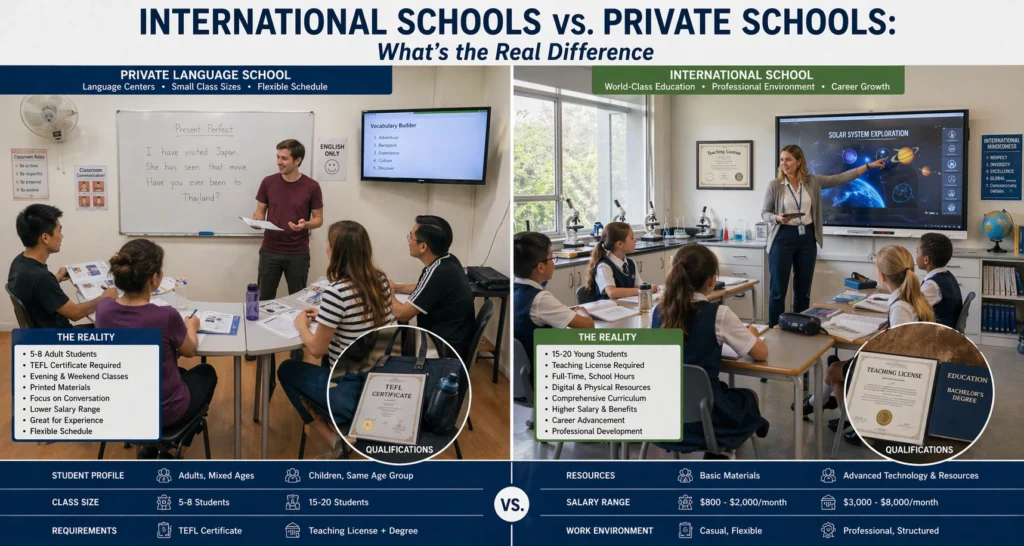
The real difference between international schools and private language schools comes down to pay, contract terms, and what credentials you need to get hired. Here’s how they compare:
| Factor | International Schools | Private Language Schools |
| Salary | $3,000-$6,000 monthly | $1,000-$2,500 monthly |
| Requirements | Teaching licence + classroom experience | TEFL certificate + bachelor’s degree |
| Benefits | Free housing, health insurance, and a pension | Rarely include accommodation or flights |
| Hiring Timeline | 6-12 months in advance via job fairs | Within weeks of applying |
| Contract Length | 1-2 year fixed terms | 3-6 months, more flexibility |
| Career Path | Professional development, promotion opportunities | Limited progression |
Your starting point determines which route makes sense. If you have a teaching licence, you can access international school salaries from day one. Otherwise, private language schools provide a faster entry point into teaching abroad, with room to move into better roles later.
Job Fairs and Teaching Opportunities: Your Starting Point
The application process varies drastically depending on which school type you’re targeting. For international schools, hiring often happens through global recruitment agencies and job fairs. At these events, you’ll interview in person (or virtually) and may even receive job offers on the spot.
Private language schools in Asia, by contrast, often prefer face-to-face hiring over remote applications. This means candidates are more likely to secure roles by arriving on a tourist visa and visiting schools directly, rather than applying from abroad.
That said, in countries with stricter visa requirements like South Korea and Japan, the tourist visa approach is rarely a viable strategy. Here, recruitment agencies often manage the full work permit process. The trade-off is that they charge schools placement fees, putting you in direct competition with other candidates on their roster.
Find Your Fit: Start With What You Can’t Compromise On
Choosing the right country for teaching abroad starts with knowing what you can’t compromise on. Your salary expectations, credential requirements, and lifestyle preferences will eliminate most options before you even look at specific countries.
Once you’ve narrowed your options to a shortlist of countries, research visa processes and contract terms. Teachers without prior experience often start in Southeast Asia or Latin America, where entry requirements are more flexible. These regions give you a foothold you can build on later.
If you’re ready to explore overseas teaching opportunities, Faces of the Layoffs helps Australian teachers find positions that fit their qualifications and career goals.
Get in touch with us today.
Leave a Reply